
Neutron Stars: Giants Born from Stellar Cataclysms

SPACELIA is a dynamic organization dedicated to space science and exploration. We strive to inspire curiosity and expand knowledge in the fields of astronomy, astrophysics, and cosmology. Through our research, articles, blogs, posts on LinkedIn and many other social platforms and educational content, we provide insightful information about celestial objects, cosmic phenomena, and the latest space discoveries. Our mission is to engage and inspire people about Space and create a community by sharing the wonders of the universe and promoting a deeper understanding of space science.
Neutron stars, born from the fiery remnants of massive stars, are cosmic marvels of extreme density and magnetic power. Formed through supernova explosions, their cores collapse to form super-dense neutron matter, packing the mass of several suns into a city-sized sphere. These stellar remnants, exhibiting pulsar phenomena and gravitational time dilation effects, challenge our understanding of physics while captivating astronomers with their enigmatic nature.
Formation of Neutron Stars
The genesis of a neutron star is a cosmic spectacle born from the fiery demise of a massive star. When a star several times more massive than our Sun exhausts its nuclear fuel, it undergoes a cataclysmic event known as a supernova explosion. During this titanic explosion, the star's outer layers are expelled into space, while its core collapses under its immense gravity.
As the core collapses, electrons and protons are forced together to form neutrons through a process known as neutronization. This process is so intense that it overcomes the electron degeneracy pressure, resulting in a super-dense core composed almost entirely of neutrons. The collapse is halted by neutron degeneracy pressure, leading to the formation of a neutron star.
The Workings of Neutron Stars
Neutron stars are remarkable for their extreme density and bizarre physical properties. With densities exceeding that of atomic nuclei, a single teaspoon of neutron star material would weigh billions of tons on Earth. Their intense gravitational fields bend space-time to an extraordinary degree, causing time dilation effects as predicted by Einstein's theory of general relativity.
Moreover, neutron stars possess incredibly strong magnetic fields, trillions of times more powerful than Earth's magnetic field. These magnetic fields give rise to phenomena such as pulsars, which are rapidly rotating neutron stars that emit beams of electromagnetic radiation. As these beams sweep across space like cosmic lighthouses, they are detected as pulses of radiation, hence the name "pulsars."
Nature of Neutron Stars
The nature of neutron stars is a realm where the laws of physics are pushed to their limits. These stellar remnants exist in a state known as "degenerate matter," where the principles of quantum mechanics govern their behavior. In this exotic state, the pressure supporting the star against gravitational collapse arises from the Pauli exclusion principle, which prohibits identical fermions, such as neutrons, from occupying the same quantum state.
Neutron stars also exhibit astonishing stability, with some pulsars spinning at hundreds of rotations per second with remarkable regularity. This stability is thought to arise from the balance between gravitational collapse and the pressure exerted by neutron degeneracy and strong nuclear forces within the star.
Famous Neutron Stars
Among the myriad of neutron stars scattered throughout the cosmos, several have captured the attention of astronomers and astrophysicists:
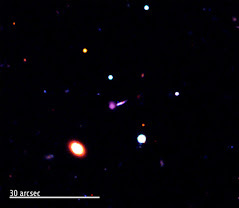
- PSR J0108-1431: Discovered in 1988, this pulsar is notable for its unusually low magnetic field compared to other pulsars, challenging existing theories of pulsar formation.
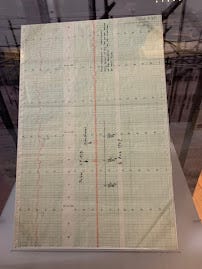
- PSR B1919+21 (LGM-1): The first pulsar ever discovered, this neutron star's discovery in 1967 by Jocelyn Bell Burnell and Antony Hewish revolutionized our understanding of stellar remnants and earned a Nobel Prize in Physics in 1974.
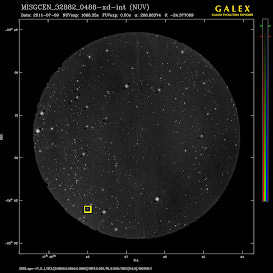
- PSR J1748-2446ad: Known as the fastest-spinning pulsar ever discovered, this neutron star completes over 700 rotations per second, pushing the limits of our understanding of stellar dynamics.
Exploring the Cosmic Enigma
Neutron stars, with their mind-bending densities, extreme physical properties, and enigmatic behavior, continue to captivate scientists and stargazers alike. As we delve deeper into the mysteries of these cosmic giants, we uncover not only the secrets of stellar evolution but also insights into the fundamental laws that govern the universe. With each discovery, we edge closer to unraveling the profound enigma of neutron stars and expanding our understanding of the cosmos they inhabit.


